Posts

Showing posts with the label Bulk Chemicals

The Power Of Iodine Extends Far Beyond Its Association With Thyroid Health

Image
Iodine Iodine, an essential trace element, plays a crucial role in the human body's optimal functioning. While often overlooked, iodine is a powerhouse nutrient with hidden potential that goes far beyond its association with thyroid health. This article aims to explore the various facets of iodine and shed light on its remarkable impact on overall well-being. From metabolism regulation to brain development, reproductive health, and beyond, understanding the power of iodine is key to unlocking its hidden potential for a healthier, more vibrant life. According To Coherent Market Insights, The Global Iodine Market Size Is Estimated To Be Valued At US$ 1,485 Million In 2021 And Is Expected To Exhibit A CAGR Of 5.4% Between 2021 And 2028. Iodine and Thyroid Health (approximately 200 words): One of the most well-known functions of iodine is its involvement in thyroid hormone synthesis. The thyroid gland relies on iodine to produce thyroxine (T4) and triiodothyronine (T3), which regu...

Exploring the Advancements in Polyolefin Resins: A Key to Sustainable Manufacturing

Image
  Polyolefin Resins Polyolefin Resins play a crucial role in the manufacturing industry, offering a wide range of applications in various sectors. As sustainability becomes an increasingly important consideration, the advancements in polyolefin resins have emerged as a key driver of sustainable manufacturing practices. Polyolefin resins are synthetic polymers derived from hydrocarbon-based materials, primarily obtained from crude oil or natural gas. They include polyethylene (PE) and polypropylene (PP), which are two of the most commonly used thermoplastics globally. These resins exhibit excellent properties, such as high chemical resistance, low density, and good impact strength, making them suitable for a wide range of applications. One of the primary reasons Polyolefin Resins contribute to sustainable manufacturing is their environmental benefits. Compared to other plastics, polyolefin resins have a lower carbon footprint due to their lower energy consumption during produc...

Succinic Acid is A Sustainable Catalyst for Chemical Reactions

Image
  Succinic Acid Succinic Acid is a naturally occurring dicarboxylic acid that has gained significant attention in recent years due to its potential as a sustainable catalyst for chemical reactions. It is derived from renewable resources such as biomass, making it an attractive alternative to traditional catalysts that are often derived from non-renewable fossil fuels. To begin with, Succinic Acid , also known as butanedioic acid, has the chemical formula C4H6O4 . It is a white crystalline solid that is soluble in water, making it easily accessible for use as a catalyst. One of the key advantages of succinic acid is its renewable source. It can be obtained through the fermentation of glucose or other sugars using microorganisms such as bacteria or yeast. This fermentation process can be carried out using renewable feedstocks, such as agricultural residues or lignocellulosic biomass, which reduces the dependence on fossil fuels and contributes to the overall sustainability of the ...

Butyric Acid: A Natural Solution for Industrial Challenges

Image
  Butyric Acid In recent years, the demand for sustainable and environmentally friendly solutions in various industries has grown exponentially. Amidst this shift, butyric acid, a naturally occurring compound, has emerged as a promising alternative for addressing several industrial challenges. Butyric Acid , also known as butanoic acid, is a short-chain fatty acid found in various natural sources, including certain bacteria, dairy products, and plant oils. This versatile organic compound possesses unique properties that make it an ideal candidate for overcoming challenges in diverse industrial sectors. Butyric acid is widely utilized as a flavoring agent and preservative in the food and beverage industry. Its distinct odor and taste contribute to the characteristic flavor profiles of many dairy products, such as cheese and butter. Additionally, butyric acid inhibits the growth of harmful bacteria, thereby extending the shelf life of food products naturally. The pharmaceutical i...

The Compound Alumina Trihydrate (ATH) Has A Wide Range Of Applications

Image
  Alumina Trihydrate Alumina Trihydrate (ATH) plays a significant role in the construction industry due to its unique properties and versatile applications. This mineral compound, also known as aluminum trihydroxide or aluminum hydroxide, is derived from bauxite ore and finds extensive use in various construction materials and processes. In this essay, we will explore the role of Alumina Trihydrate in the construction industry and its impact on enhancing safety, durability, and sustainability. According To Coherent Market Insights, Global Alumina Trihydrate Market Was Valued At US$ 4,613.5 Mn In 2022, Exhibiting A CAGR Of 6.42 % In Terms Of Revenue, Over The Forecast Period (2023 To 2030) To Reach US$ 7,589.3 Mn By 2030. One of the primary uses of Alumina Trihydrate in the construction industry is as a flame retardant. Alumina Trihydrate is added to different materials, such as coatings, adhesives, and polymers, to improve their fire resistance properties. It acts as a heat s...

Minerals Containing Silicon And Oxygen Are Known As Silicates

Image
  Silicates Silicates are a class of minerals that are composed of silicon and oxygen atoms. They are the most abundant minerals on the Earth's crust, and they form the backbone of the geology of our planet. In fact, silicates make up about 90% of the Earth's crust by weight. Silicates can be found in a wide range of natural materials, from rocks and soil to sand and even glass. Silicates are formed from the reaction of silicon with oxygen. Silicon is a chemical element that is the second most abundant element in the Earth's crust after oxygen. It is a metalloid, meaning that it has properties of both metals and nonmetals. Oxygen is a highly reactive gas that is essential for life and is the most abundant element in the Earth's crust. The structure of silicates is based on the tetrahedral arrangement of silicon and oxygen atoms. A tetrahedron is a four-sided pyramid with a triangular base. In the case of silicates, the base of the pyramid is formed by three oxyge...

Several Ritualistic And Therapeutic Uses Are Associated With Camphor

Image
  Camphor Camphor is a white crystalline substance that is derived from the wood of the camphor tree or synthesized from turpentine oil. It has a distinctive aroma and is commonly used in a variety of products, including medicine, cosmetics, and insect repellents. In this article, we will explore the working and uses of camphor. Camphor has a complex molecular structure that allows it to interact with the human body in various ways. When camphor is ingested or inhaled, it produces a cooling sensation and has a mild anesthetic effect. This makes it useful for relieving pain, reducing inflammation, and treating respiratory conditions such as coughs and bronchitis. Camphor is also a natural insect repellent. Its strong aroma and volatile nature make it effective at repelling mosquitoes, flies, and other insects. Camphor works by interfering with the insect's nervous system, causing it to become disoriented and unable to function properly. In addition to its medicinal and insect...

Butyric Acid Is A Fatty Acid Produced By The Beneficial Bacteria In Your Gut When Dietary Fibre Is Broken Down

Image
  Butyric Acid  Butyric Acid is used extensively in the chemical, food, and pharmaceutical industries. Butyric acid is widely used in the chemical industry to make thermoplastics such as cellulose acetate butyrate. Glycerol tributyrate and other esters are also essential components of polymeric polymers. Butyric acid is utilised to provide butter-like notes in food odours, and its esters are commonly employed as food additives to boost fruit scent. Butyric acid, a short-chain fatty acid produced by bacterial fermentation of dietary fibres in the colon, is a major energy source for the human body and has been identified as a colon cancer suppressor. Its biological effects have been extensively researched, and it has been shown to be effective in treating hemoglobinopathies, cancer, and gastrointestinal illnesses. A class of acyloxyalkyl butyrate prodrugs is now under clinical trials. Butyric Acid derivatives have also been employed in the production of antithyroid and vasoco...

The Scientific Name For The Substance Is Alumina Trihydrate (ATH), And Its Chemical Formula Is (AI2O3•3H2O)

Image
  Alumina Trihydrate When used as a filler, extender pigment, and bodying agent in oil- and water-borne paint, Alumina Trihydrate (also known as aluminium hydrate, alumina hydrate, aluminium hydroxide, or ATH) has a minimal impact on the colour of the paint. This powder, which has an 8-micron median particle size and ranges in colour from white to tan, can be added to paint to give the paint film more transparency. Due to its adaptability and affordability, Alumina Trihydrate is the most popular flame retardant in commercial coatings. It is suitable for use in a variety of paint binders when processing temperatures are lower than 220 °C. ATH has a low abrasiveness, is non-toxic, halogen-free, and chemically inert. Acid resistance and smoke suppression are added advantages. At around 220 degrees Celsius, ATH starts to endothermically breakdown, releasing roughly 35% of its weight as water vapour. Acid resistance and smoke suppression are added advantages. At around 220 degrees Ce...

Amines Are Used To Produce Dyes, Rubber, Pharmaceuticals, And Synthetic Resins And Fibers

Image
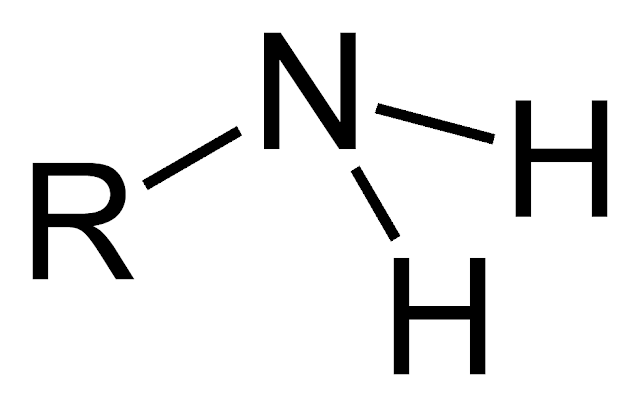
  Amines  Amines are organic compounds that have a functional group consisting of a nitrogen atom with a lone pair of electrons attached to at least one organic hydrocarbon group. The organic group can be a single alkyl, aryl, or aromatic ring. They are often called by their IUPAC name, which is a combination of the prefix “amino-” and the suffix “-amine.” Amine molecules have high melting and boiling points. This is because the lone pair of electrons on the nitrogen atom can form hydrogen bonds with other molecules. These are very strong interactions and require a lot of energy to overcome. Aside from their high melting and boiling points, they have several other interesting physical properties. For example, they have a trigonal pyramidal shape with nitrogen at the apex. Amines also have bond angles of 107 deg. This is the highest degree of symmetry that can be achieved in an organic compound. They can act as both weak Bronsted-Lowry bases and Lewis bases. Because of t...

Pest Control Products And Services; Used To Control Insects Other Repellants

Image
  Pest Control Products And Services Pest Control is an important service that aids secure the home and family from hazardous and annoying insects and various pests. However before one calls a pest control supplier, one requires to know what they do and how they work it. Pest control product supplier provide several services that assist secure the home from hazardous pests. Pests indicate to any insect or animal that is unwanted in or across the surroundings of house. General pests comprise of spiders, termites, mice, ants, and rats. Pest Control Products And Services can scale from usual pest control to targeted therapies for particular vermin. Many suppliers will start by checking the home and detecting any strong problematic surroundings. From it, they will start a plan personalized to the requirements. Not all pests are similar, and not all pest control expert suppliers will target each kind of pest. Few suppliers aim on usual prevention, whereas others remove particular pe...

A Branch Of Chemistry That Studies Compounds Without Carbon-Hydrogen Atoms Is Called Inorganic Chemicals

Image
  Inorganic Chemicals Industrial chemicals are utilised in a variety of industries for a variety of reasons, from petrochemicals to lithium metals for rechargeable batteries to mined industrial minerals used in building or manufacturing. Nitrides, sulphates, metal oxides, sulphides, halides, carbonate, phosphates, and nitrates are a few of the inorganic chemicals that are frequently used in industries. Industrial Inorganic Chemicals specifically include fertiliser, ammonia, ammonium nitrate, organic chemical reagents, silica, metallic catalysts, and titanium dioxide pigment. Hydrochloric acid, ammonia, carbon black, sulfuric acid, ammonia salts, and chlorine are a few crucial industrial inorganic compounds. Other high-value applications for inorganic compounds, including lithium metals, include electronics, aerospace energy, and other high-tech fields. Inorganic Chemicals can also be found in industrial minerals such gypsum, silica sands, bauxite, rare earth minerals, and alumi...

As A Member Of The Alcohol Family, Glycol Is An Organic Compound

Image
  Glycol  Glycol , also known as ethylene glycol, is a colorless, odorless, and sweet-tasting liquid that is used as a solvent, antifreeze, and coolant. It is a type of alcohol that has two hydroxyl groups (-OH) attached to a two-carbon chain. Glycol is highly soluble in water, making it a useful ingredient in a wide range of industrial and consumer products. Glycol is commonly used as an antifreeze in automotive engines, as it can lower the freezing point of water and prevent the engine coolant from freezing in cold temperatures. It is also used as a coolant in air conditioning and refrigeration systems, as well as in industrial processes that generate heat. According To Coherent Market Insights, The Global Glycol Market Size Is Estimated To Be Valued At US$ 37000.00 Million In 2021 And Is Expected To Exhibit A CAGR Of 6.8% Between 2022 And 2030. One of the key properties of glycol is its ability to absorb and release heat. This property is exploited in various industri...

Osmium Has A Wide Range Of Uses, From Jewelry Making And Writing Implements To Electrical Contacts And Furnace Linings

Image
  Osmium  Osmium is a chemical element with the symbol Os and atomic number 76. It is a dense, metallic, blue-gray transition metal that is highly resistant to corrosion and wear. It is found in trace amounts in platinum ores, and is the densest naturally occurring element, with a density of 22.59 g/cm3. Osmium has a high melting point (3306°C) and boiling point (5285°C), making it useful in high-temperature applications such as furnace linings and electrical contacts. The metal is also very hard and brittle, making it difficult to work with but useful in applications where high strength is required, such as electrical contacts, pen tips, and compass bearings. The name " Osmium " is derived from the Greek word "osme," meaning "smell," due to the intense and unpleasant odor produced when the metal is heated or forged. The element was discovered in 1803 by English chemist and mineralogist Smithson Tennant, who named it after the odor. Osmium is highly...

In Chemical Terms, Resorcinol Has The Formula C6H6O2

Image
  Resorcinol   Resorcinol is a phenol that has had a hydroxyl in the meta position replaced. Pyrocatechol is a phenol substituted by an orthohydroxyl group, while hydroquinone is a phenol substituted by a parahydroxyl group. m-dihydroxybenzene, 1,3-dihydroxybenzene, and benzenediol-1,3 are other names for resorcinol. It is a crystalline powder that is soluble and dissolves at 111°C and 281°C, respectively. Resorcinol, like phenol, is a protoplasmic toxin that kills cells by inactivating enzymes, denaturing proteins, and creating insoluble proteins. In addition, both phenol and resorcinol affect the cellular membrane, altering its physical characteristics to vary its selective permeability. Cell death is the result of this alteration in permeability. According To Coherent Market Insights, The Global Resorcinol Market Size Is Estimated To Reach US$ 570 Million By 2027, And Register A CAGR Of 3.1% Over The Forecast Period (2019 - 2027). Phenol is a more potent toxin when use...

For The Decomposition Of Organic Matter, Concentrated Nitric Acid (HNO3) Is One Of The Most Widely Used Digestion Reagents

Image
  Concentrated Nitric Acid The automobile industry's expanding usage of elastomers, synthetic rubbers, polyurethane foam, improved aircraft performance, and the chemical industry are some of the elements that support the expansion of concentrated nitric acid. A colourless, caustic liquid called Concentrated Nitric Acid is created when ammonia is catalytically oxidised using the Ostwald process. Extremely corrosive and oxidising is nitric acid. It reacts with a wide range of metals, with the exception of gold and platinum. Nitric acid is used to produce both organic and inorganic nitrate and nitro molecules. Numerous products, including explosives, fertilisers, dyes, elastomers, synthetic rubber, and others, utilise these nitrates and nitro compounds. Numerous sectors, including steel, metallurgy, chemicals, and others use it. Concentrated Nitric Acid is used in the production of ammonium nitrate, trinitrotoluene, adipic acid, nitrobenzene, toluene diisocyanate, and nitroglycer...

Graphite Is Formed When Carbon Is Subjected To Intense Heat And Pressure In The Earth's Crust And Upper Mantle

Image
  Graphite  Carbon exists in its crystalline form as graphite. Graphene is layered in layers to make it. Under normal circumstances, graphite is the most stable form of carbon and it is found in nature. In 1989, 300 kton of natural and synthetic graphite were consumed annually for usage in electrodes, lubricants, and pencils. It turns into diamond at high pressures and temperatures. It is a poor conductor of both electricity and heat. Because sedimentary carbon compounds are reduced during metamorphism, Graphite can be found in metamorphic rocks. Additionally, it can be found in meteorites and igneous rocks. Quartz, calcite, micas, and tourmaline are among the minerals connected to graphite. China, Mexico, Canada, Brazil, and Madagascar are the top exporters of mined graphite by tonnage. Graphite also occurs in meteorites along with the minerals troilite and silicate. Cliftonite is the name for tiny graphitic crystals found in meteoritic iron. Certain tiny grains have uniqu...

For The Preparation Of Certain Explosives And For The Propulsion Of Missiles And Rockets, Fuming Nitric Acid Is Used In Highly Concentrated Nitric Acid

Image
  Concentrated Nitric Acid Nitric acid (HNO3), sometimes referred to as spirit of niter or aqua fortis, is a corrosive mineral acid. It has a potent oxidising agent and an offensive odour. Since it is naturally produced when rainwater reacts with airborne nitrogen oxides, nitric acid is mostly utilised to supply nitrogen to other molecules. Because to its severe toxicity, it must be handled carefully while donning gloves, a mask, and safety glasses. When nitric acid comes into touch with metals, it releases flammable hydrogen gas. In order to create ammonium nitrate (NH4NO3), which is widely used in fertilisers, about 70% of nitric acid is used, according to the U.S. Environmental Protection Agency (EPA). Due to its need in fertiliser companies for the manufacture of ammonium nitrate and calcium ammonium nitrate, Europe has the biggest consumption of Concentrated Nitric Acid . The Annual Production Of Nitric Acid Was Estimated At 55 Million Tonnes By Coherent Market Insights. Ad...

Triiodothyronine (T3) And Thyroxine (T4) Are Thyroid Hormones Made From Iodine

Image
  Iodine Iodine is a mineral that exists naturally and is present in the soil and oceans of the planet. Iodine is a mineral that can be found in the iodized form and is present in saltwater and plant-based foods. Particularly during the growing stage or during pregnancy to support the healthy development of the foetus, it is thought to be a vital mineral for human bodies. Iodine also plays a very important part in keeping the thyroid healthy. A hormone that regulates a variety of bodily functions, including metabolism, heart health, and many others, is produced and helped to regulate by the thyroid. Consequently, a sufficient iodine level is crucial for controlling the body's various functions and maintaining better health. For clear imaging purposes, iodinated contrast agents are essentially injected into a blood vessel. Iodine is in high demand from the medical industry for use in imaging procedures. Additionally, acylation of alcohols, benzylic alcohol oxidation, and cycloadd...

Industrially, Acetic Acid Has Been Prepared By Air Oxidation Of Acetaldehyde, Ethanol (Ethyl Alcohol), And Butane And Butene

Image
  Acetic Acid Acetic Acid is a colourless liquid chemical compound. Ethanoic Acid is another name for acetic Acid. Methanol carbonylation produces it. Acetic Acid is widely used as a key intermediate in the production of chemical products such as Purified Terephthalic Acid (PTA), Vinyl Acetate Monomer (VAM), and others. Acetic Acid is widely used in the pharmaceutical, rubber, plastics, construction, and paints and coatings industries. Polyvinyl acetate is widely used in a variety of applications, including packaging films, thickeners, and photosensitive coatings. Polyvinyl alcohol is widely used in paints and paper coatings due to its excellent adhesion properties. Acetic Acid, also known as ethanoic Acid, is an Acidic, colourless liquid and organic compound with the chemical formula CH3COOH (also written as CH3CO2H, C2H4O2, or HC2H3O2). Vinegar contains at least 4% acetic Acid by volume, making it the main component of vinegar other than water and trace elements. Acetic Acid is...