Posts

Showing posts with the label Virus

Breathalyzers are devices that estimate blood alcohol content (BAC) or detect viruses or diseases from a breath sample.

Image
  Breathalyzers Breathalyzers are devices that utilise a person's breath to assess their blood alcohol levels. Probation departments, police departments, correctional houses, and the business sector all use these devices. Breath analyzers do not directly assess blood alcohol content or concentration, hence a blood sample must be analysed. Instead, they measure the amount of alcohol in one's breath to determine BAC indirectly. There are two types of breathalysers that are often utilised. Small hand-held breathalysers aren't accurate enough to be used in court, but they're good enough to support an arrest. Larger Breathalyzers equipment, such as those used in police stations, can then be utilised in court to provide evidence. The most common breathalyser technology are: Infrared spectrophotometer technology, electrochemical fuel cell technology, or a combination of the two are commonly used in desktop analyzers. Hand-held field testing devices are based on electroche...

The Discovery of Novel Biomakers helps in Growth of Autoimmune Disease Diagnostics

Image
  Autoimmune Disease Diagnostics To defend the body, the immune system of the human body recognises various invaders such as bacteria, viruses, and foreign substances and assaults them. However, the immune system can occasionally mistake healthy bodily cells for alien ones and attack them. Autoimmune disease is a term used to describe such a disorder. The autoimmune illness causes organ development and function to shift abnormally. The genes of a person who has been exposed to the environment may be the primary cause of autoimmune illness. Type 1 diabetes, systemic lupus erythematosus, inflammatory bowel disease, and rheumatoid arthritis are just a few of the roughly 80 forms of autoimmune disorders. A cure for autoimmune illnesses is not yet accessible; instead, only symptomatic therapies are offered. Testing such as antinuclear antibody tests, antibody tests, complete blood counts, and others can be used to diagnose autoimmune disorders. According to the American Autoimmune R...

Swine Respiratory Disease Affects the Respiratory Tract of Swine So to Cure it Swine Respiratory Diseases Treatment is Important

Image
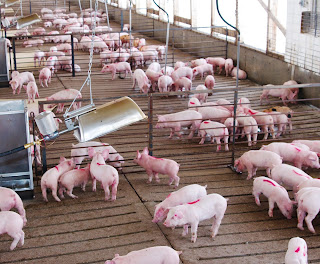
Swine respiratory disease affects the respiratory tract of swine. It is one of the prevalent cause of death in nursery pigs and grower/finisher pigs. There are multiple pathogens, viruses, and other secondary causative agents that causes respiratory disease in swine. Primary pathogens that causes swine respiratory disease are Actinobacillus pleuropneumoniae (APP), Mycoplasma hyopneumoniae, Bordetella bronchiseptica, and Pasteurella multocida. Viral agents involved are porcine reproductive and respiratory syndrome (PRRS) virus and swine influenza virus (SIV). Various diseases that come under ambit of swine respiratory disease are mycoplasma pneumonia, swine influenza, classical swine fever atrophic rhinitis, pleuropneumonia, porcine reproductive and respiratory syndrome, and porcine circovirus type 2. These infectious agents together increase the severity of the disease. Growing awareness about the health of swine among pork consumers has spurred research on pig's p...

What are different Swine Respiratory Disease Treatment Available Today?

Image
  Swine Respiratory Disease is caused by a virus that is called Herpes Simplex Virus (HSV) and is highly contagious. This Herpes Simplex Virus (HSV) is transferred by contact with an infected person or any surface area that comes in contact. The name Swine Respiratory Disease comes from the fact that the symptoms most commonly associated with this condition include those associated with respiratory ailments. Swine flu is the name for this strain of the virus, although it is called such because it predominantly affects people of Asian and African descent. SwineRespiratory Disease treatment typically includes fluid restriction, rest, and bed confinement. For some patients, the use of certain antiviral medications may be indicated. In the most severe cases, patients may require a transplant of the infected tonsils or other parts of the nose for Swine respiratory disease treatment. There is currently no cure for this virus, but there are medications available to help t...

What is Inactivated Vaccine? How it is Prepared and Why this Vaccine is Used?

Image
  An I nactivated V accine , also known as a killed vaccine, is a vaccine made from live microorganisms, viruses, bacteria or other pathogens that has been grown in controlled culture and subsequently killed with the use of a chemical. On the other hand, dead vaccines work just like live vaccines. In most countries, vaccines are usually inactivated through simple means. For instance, it may be boiled or injected in order to sterilize the vaccines. Some vaccines, however, require a more sophisticated procedure, as in the case of inactivated influenza vaccines, whole-body heat for approximately two hours. There are risks involved in having a child receive an I nactivated V accine . One of the risks is that the microorganisms included in the vaccine may grow and adapt to the human immune system. This can result in the child being predisposed to some types of infections. Moreover, some children can develop life-threatening conditions after having received the vaccine. ...